
PLAY NOW WAS ALREADY NATIONAL. PROVING IT HAD TO BE REGIONAL.
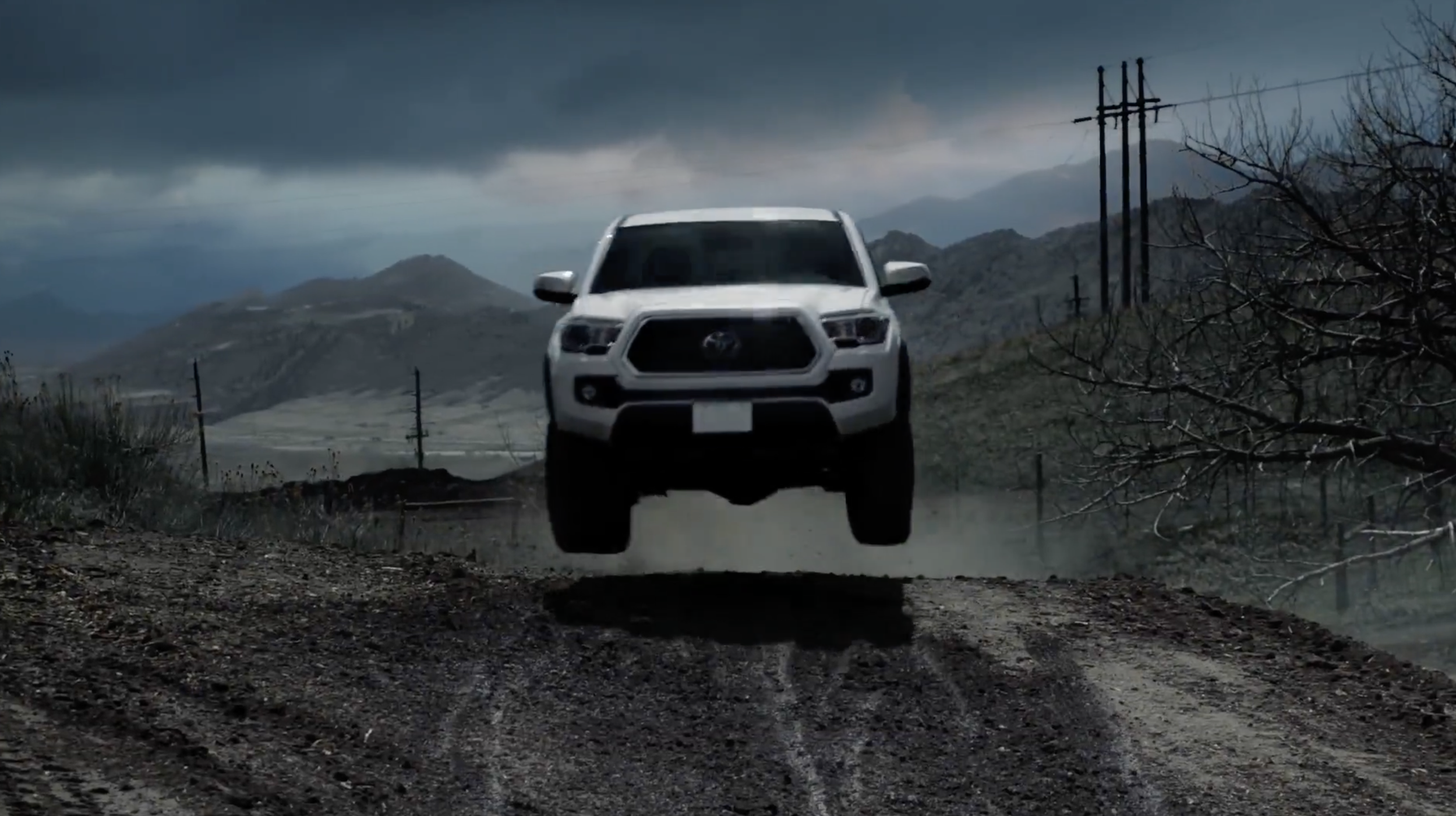
Play Now was a national Tacoma platform by the time it reached Colorado — my job wasn't inventing the line, it was proving it held up against off-road buyers who don't take a truck's word for anything. That meant real terrain, not a studio: dirt trails, river crossings, technical rock crawls, on a day nasty enough that wind tore loose paper into a sky gone the color of a coming storm.
MUD, NOT THE BRIEF, WROTE THE SOUND.
By the end of the day you couldn't read the badge without wiping it first — this shoot took more spot-cleaning of the branding than any other, just so you could tell whose truck it was.
The score for the final cut wasn't in a brief. The Colorado Film School crew had a portable speaker going off to the side of the mud track, playing Greta Van Fleet loud enough to cut through the gear — I mistook it for Led Zeppelin at first, then asked around and got schooled. It was a Michigan band on a Colorado crew’s speaker, and it already fit the day. Standing in the mud, I said it out loud: "That's what this spot needs." And that's what it got.
The storm in the edit wasn't invented either. A real one rolled through mid-shoot, and post just pushed what was already there — including the same wind that carried that loose paper off into the sky.
And the jump — the biggest one we caught on camera all campaign — almost didn't happen. It needed sign-off all the way up the chain, and it got it because every shoot before this one had built the process to make that risk one we could actually stand behind.
ONE SHOOT, BUILT TO FEED EVERYTHING AT ONCE.
I ran capture across every channel from that single field day instead of budgeting separate shoots for broadcast and digital — high-energy motion for broadcast, static frames for print, vertical cuts built for phones. I brought on a junior AD whose instincts were already pointed at digital before most agencies took it seriously, and made a point of getting him a real shoot to sharpen it on, not just training-wheels assignments — recognizing that kind of instinct early is part of the job. When the crew got young and rowdy in the mud, I got in the pit with them instead of directing from behind a monitor. That's how you keep a shoot moving under a tight clock — not from the sideline.
THREE SECONDS. THAT'S ALL YOU GET.
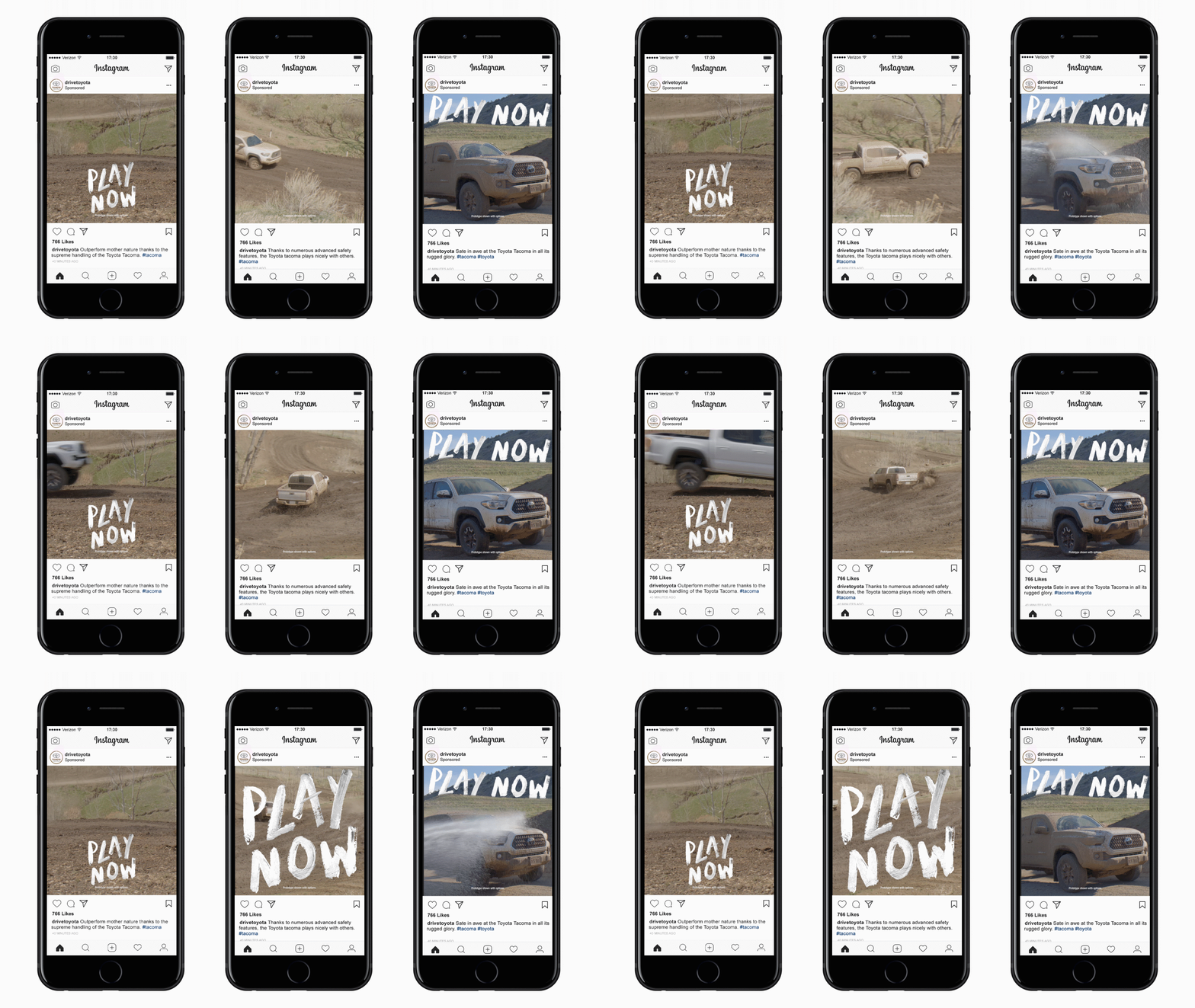
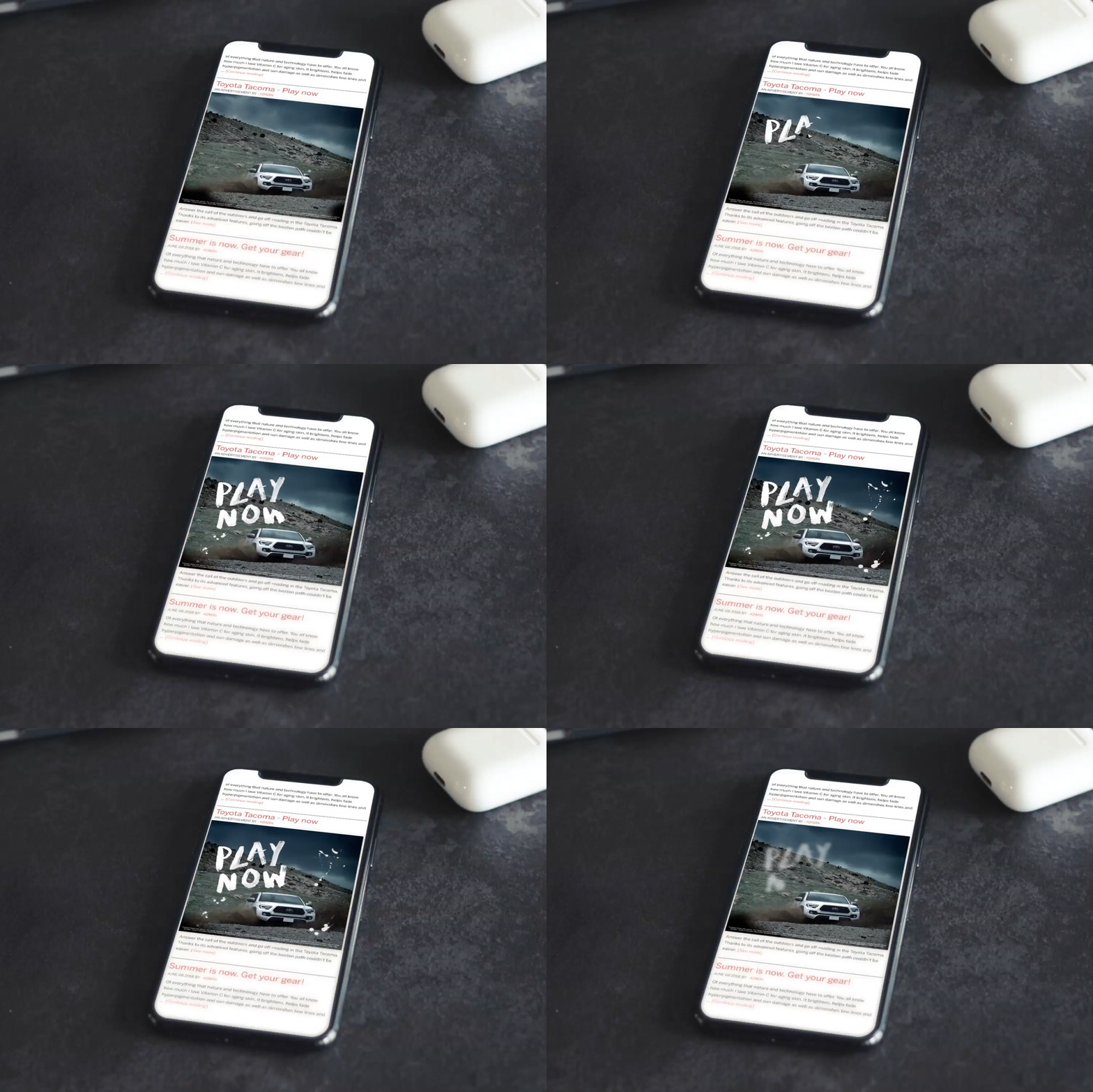
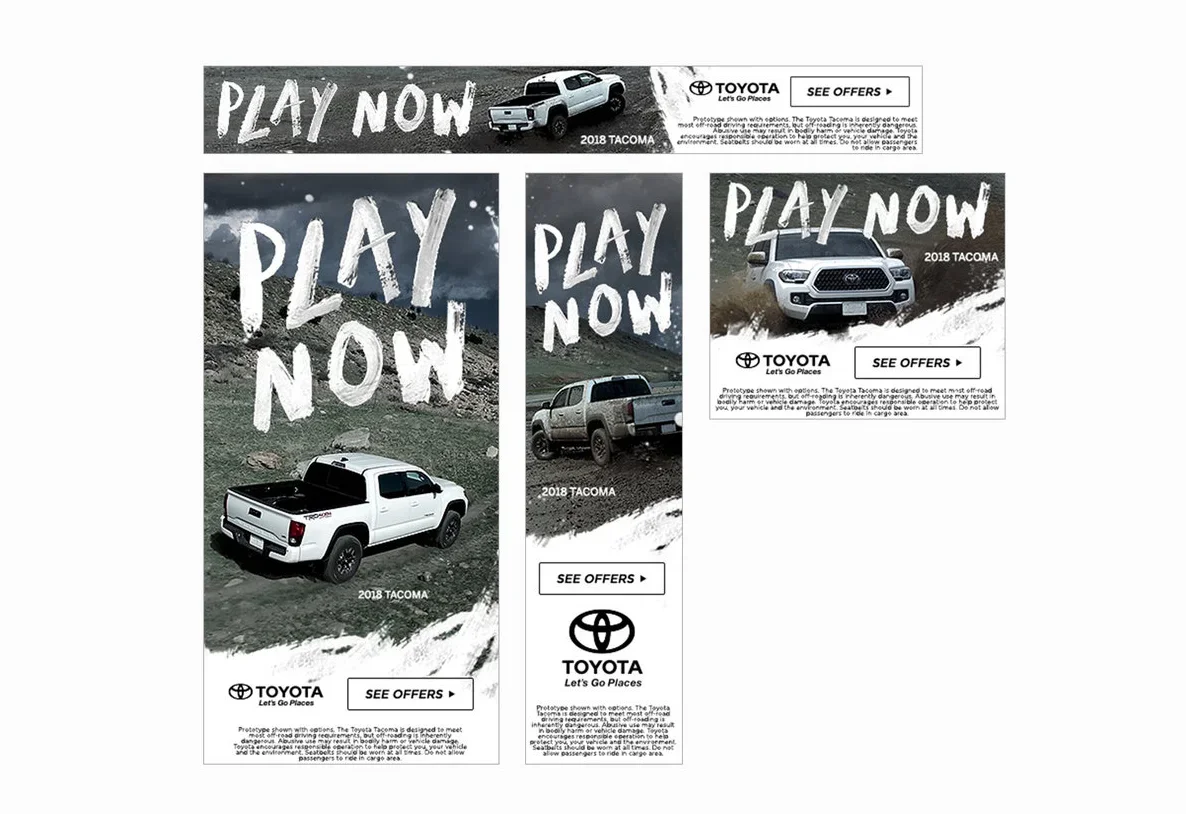
The full spot got cut down into three-second loops built specifically to stop a scroll: the truck launching over the Play Now logo, a fishtail around a bend timed to the super's reveal, and a boomerang of mud spraying on and washing off in one continuous motion. Static banners rounded out the buy — the least exciting part of the kit, but they had to carry the same look everywhere the loops couldn't run.
VERTICAL
WASN'T
A
CROP.
IT
WAS
THE PLAN.
One cutdown wasn't a resized version of the widescreen spot — we shot it vertical, on set, on purpose. It's standard practice now. It wasn't yet when we planned for it on this shoot. Retrofitted footage almost always looks like exactly what it is: a crop. Planning for vertical from the start meant this one could open with a scream and a musical hit, then land its own line, built like a dare: the outdoors are calling, and they want to know if you can come out and play.
WHAT ONE DAY IN THE STORM ACTUALLY BUILT.
This was the last Colorado Film School shoot I ran, and it carried everything the earlier ones taught me — the process that kept a tighter schedule, the trust to hand a crew real creative latitude, the confidence to fight for a bigger risk when it mattered. Play Now wasn't my line. Making it hold up on this terrain, with this crew, was.